
The Go-Between
Says Get Britain Out of the Shit

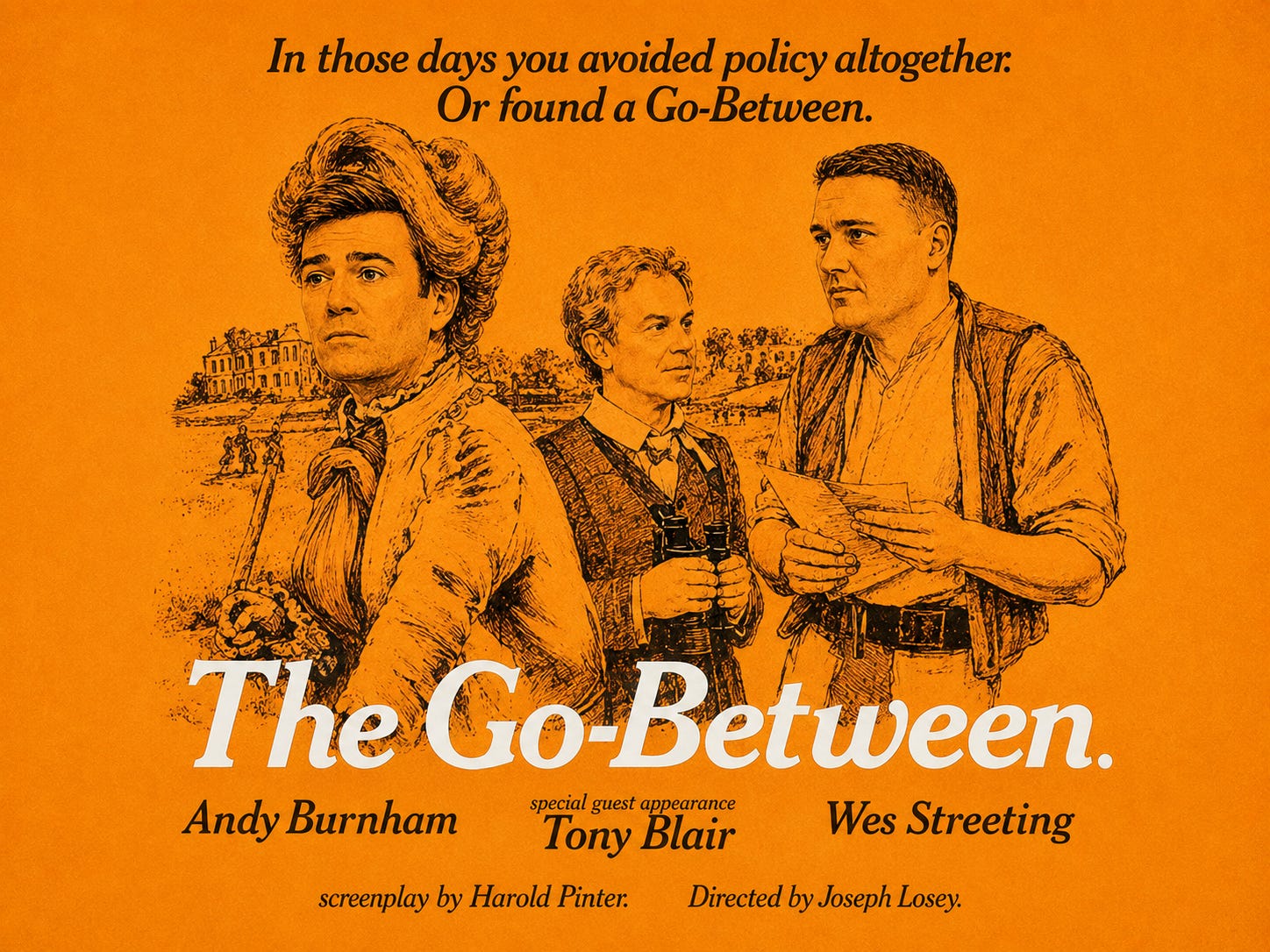
Before we get stuck in, there are two aspects of modern political coverage in the UK that I have come to loathe and one that I have begun to worry about. I insist on sharing them with you.
Hate one: Friends of allies of sources
Would we really lose valuable insights into what’s going on if political journalists dropped the practice of quoting anonymous sources in situations where the identity of the source is critical to understanding the story? Or if they refused to enter into silent you-scratch-my-back pacts in order to get a byline? In the last week Andy Burnham both will and won’t be calling a snap election after his inevitable ousting of the prime minister. To see “sources close” to Andy Burnham say things that are contradicted by “spokesmen for Andy Burnham” in the same piece is to enter a shadow world where only the journalist and the “source” comprehend what is happening. That, in Shaw’s phrase, is a “conspiracy against the laity”. We’re supposed to just take it on trust, and I’m afraid I can’t.
Hate two: Take that (and that take, and that)
I may be a fine one to talk, but the world now seems stuffed with people trying to make a living by producing instant and distinctive “takes” on political events and situations. The eye-catching nature of the take often seems more important than its analytical quality, and together they create a cacophony that has driven me away from listening or watching programmes or podcasts where pundits sound off on issues of the moment. No one should care what (to give a possibly unfair example) the “Catholic writer” Tim Stanley thinks about things, because he doesn’t much seem to care himself and yet there he is all over the Telegraph, Newsnight and Question Time.
Worry one: too much polling
And here I segue into my subject. On Wednesday Tony Blair dropped his 5700-word essay on the debate he believes Labour should be having – in fact should have had in 2010. So long is 5000 words considered to be these days that it was treated by the commentariat as though he had written a political version of War and Peace.
Within a day YouGov had managed to post a poll on who would make the best prime minister, Blair or Starmer, It was pretty much evens, but that’s beside the point because - of course – Blair isn’t standing to be Labour leader. It was an entirely otiose exercise in which the pollster said, in effect, “we have nothing useful to say about any of this policy stuff but look at us anyway!”
There is a lot of this going on at the moment and it wouldn’t matter if the results of this often-arbitrary questioning wasn’t influencing how politicians actually behave – but they do. The obvious problem with endless speculative polling is that pollsters find it hard to confront respondents with the real choices that governments have to make. That doesn’t stop these dramatic poll results leading to an orgy of over-interpretation and selective deployment. . (Caveat: there are some very careful social policy research outfits out there that use polling in a far more systematic way. The Policy Institute at Kings College London being a prime example.)
Put all this together and what you end up with is a political class of commentators, pundits and pollsters in love with their own importance, dedicated to becoming king and queen makers and unmakers but never themselves responsible for anything. I’d quote Baldwin here but I have never quite understood why harlots – of whatever age - could be said to wield power without responsibility. The Westminster lobby on the other hand? Definitely.
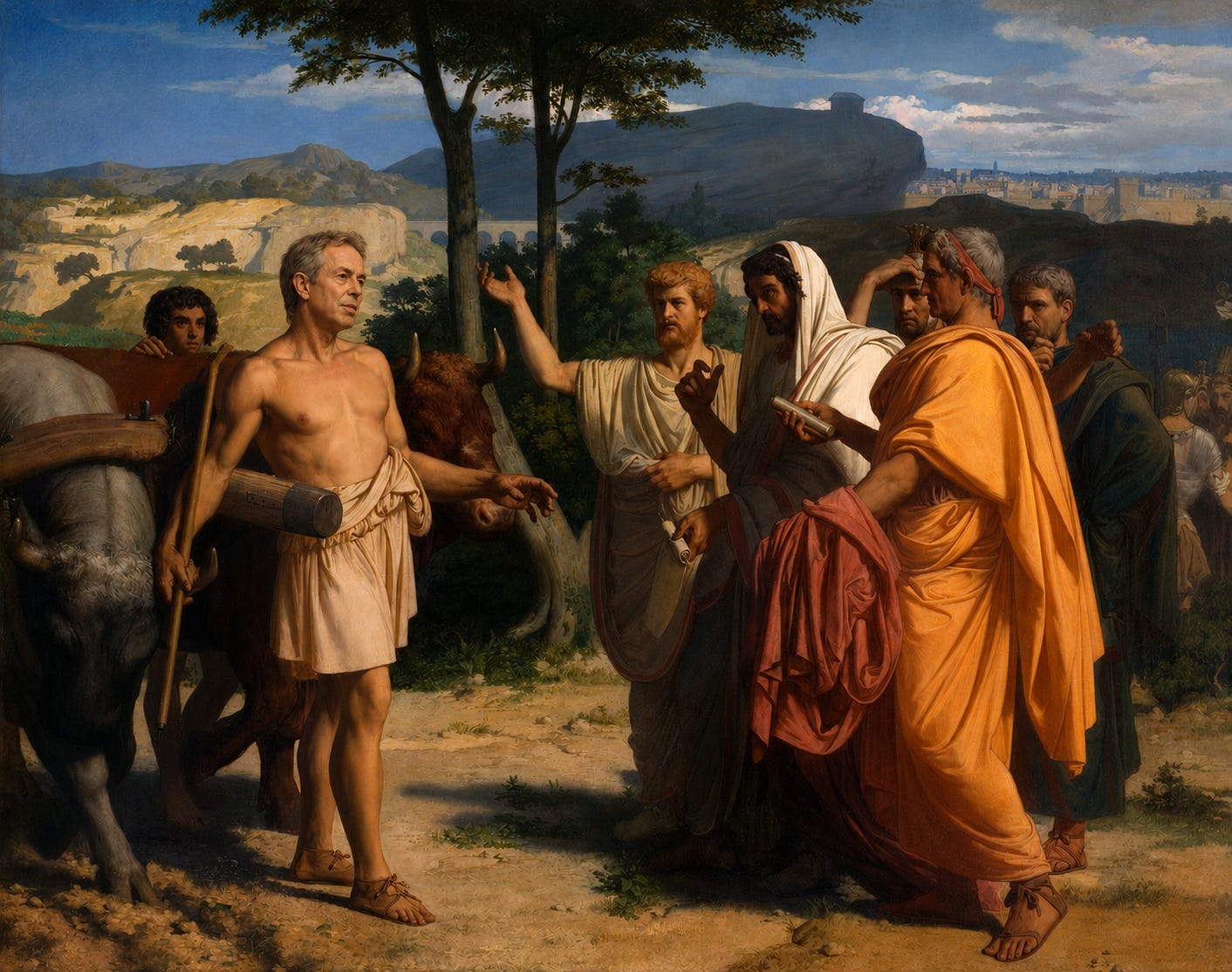
Blair calls himself from his plough - not
That the YouGov poll was missing the point has turned out to be exactly my point. Blair’s essay wasn’t a manifesto for leadership. How could it be? Can you imagine the Blair by-election? This was not Cincinnatus cleverly seeking to be recalled in order to serve Rome by leading it. He’d written this because he believed it.
Anti-Ed
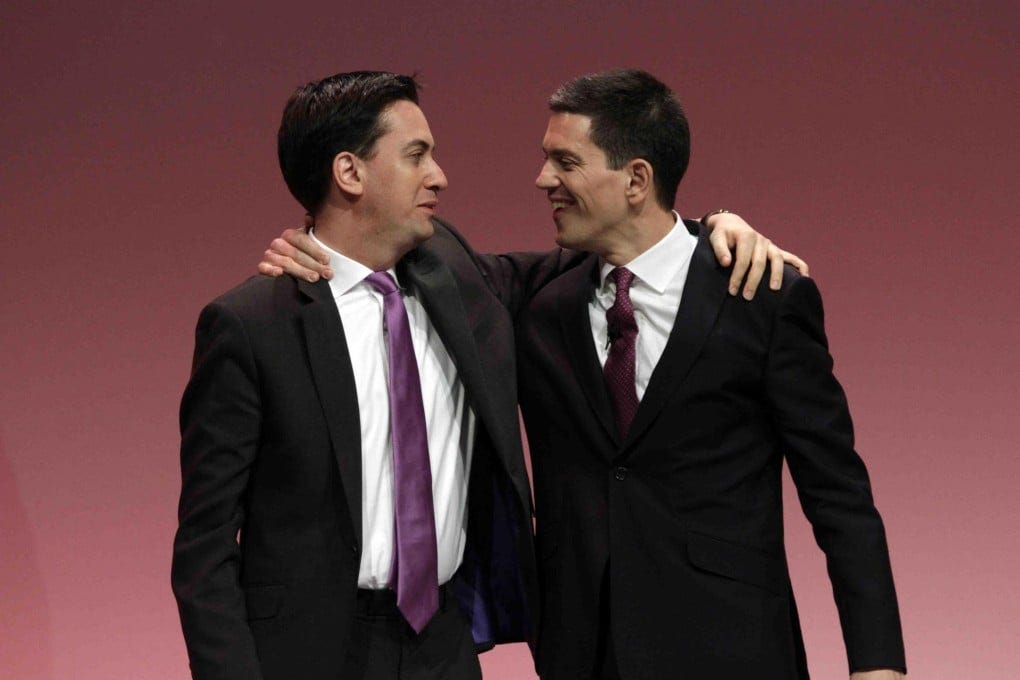
Blair could see that Labour was embarked upon a leadership battle in which the main claim that might decide the contest was nothing to do with policy let alone vision and everything to do with that fabulous vagueness “personality”. If there was a moment sitting there somewhere in the attic of his memory it might well have been the “Ed Speaks Human” appeal with which the younger Miliband’s supporters had wooed Labour members to give their support to him, and not his brother David, in the 2010 leadership election.
In fact an animosity to the failed mini-Miliband leadership of 2010-15, which culminated in Corbyn is present throughout the Blair essay. In addition to the idea that Ed had the warmth and charisma David lacked (remind you of anything?), his campaign was to distance him and the party from the decade long Blair premiership and in a couple of places – understandably but unnecessarily – Labour’s most electorally successful leader reminds his readers of that fact.
Ed promised success by pulling the party to the Left and into what Blair describes as its “comfort zone” – the zone in which Blair has always been most uncomfortable. He believes almost emotionally (and I agree with him) that the easy cheer is usually the most treacherous. In Labour’s case it will almost always involve the idea that there is a lot more money sitting around to be distributed to almost everyone and every favoured project, to be paid for by (a) the rich and (b) lenders. This redistributed money will then itself at some point in the future reproduce itself as growth. It’s Left Trussism.
Early in Starmer’s premiership, U-turning on two policies aimed at reducing the rise in public spending gave Labour MPs the impression that fiscal realities weren’t quite as bad as they had themselves been claiming before the 2024 election. And indeed, they weren’t – they were worse.
So points one and two of Blair’s argument were that having an election effectively for prime minister mid-term on the basis of personality was a mistake. But if you were to do it, it had to end up with whoever won (Starmer, Burnham or Streeting) elaborating a project – a vision with a strategy attached – to guide the party and put before the voters.
The rest of the essay concentrated on what Blair thought that strategy had to be. He won’t have expected endorsement, but in setting it down at a length that forced people to actually concentrate for more than three minutes, Blair clearly hoped to act as a kind of Go-Between, inviting the contenders to meet on the ground of substantive debate. Which they began to do.
The very idea of this in a Tik Tok world can seem laughable to some. That Blair’s intervention had led to contributions from both Starmer and Burnham and a response from Streeting, provoked the BBC’s Laura Kuenssberg to mildly ridicule the outcome as “some politicians decided that the best way to communicate with the world was to write some very long pieces of text!”
